

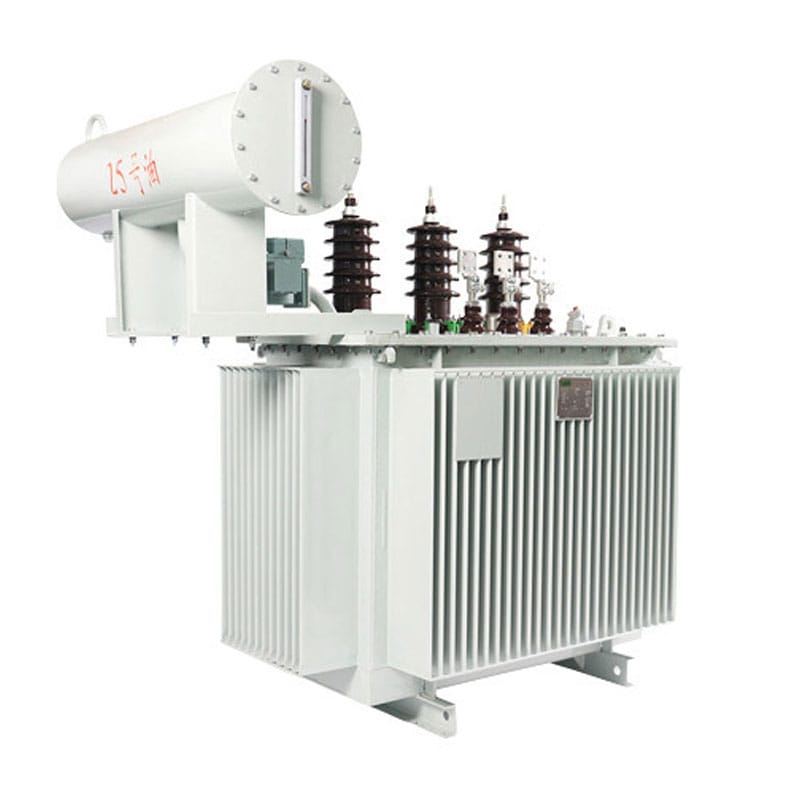
The oil-immersed transformer is a critical device in the power system. Its core and windings are immersed in insulating liquid (mainly transformer oil). Its working principle is based on the law of electromagnetic induction. Simply put, the transformer consists of a primary, a secondary, and a core. When an alternating current passes through the primary winding, an alternating magnetic field is generated in the core, and this alternating magnetic field induces an electromotive force in the secondary winding. According to the principle of electromagnetic induction, the magnitude of the induced electromotive force is proportional to the number of turns of the winding. By reasonably designing the turns ratio of the primary and secondary windings, voltage conversion can be achieved, such as converting high-voltage electricity into low-voltage electricity suitable for home and industrial use.
At the same time, transformer oil plays a dual important role in it. On the one hand, it has good insulation properties and can effectively isolate the electrical connections between windings, between windings and cores, and between windings and boxes, preventing the occurrence of faults such as leakage and short circuits, and ensuring the safe and stable operation of the transformer. On the other hand, during the operation of the transformer, the winding and the core will generate heat due to the thermal effect of the current. The high specific heat capacity and good thermal conductivity of the transformer oil enable it to absorb this heat and dissipate the heat to the surrounding environment through the tank wall and the radiator, thereby ensuring that the temperature of the transformer is within the normal range and avoiding damage to the equipment due to overheating.
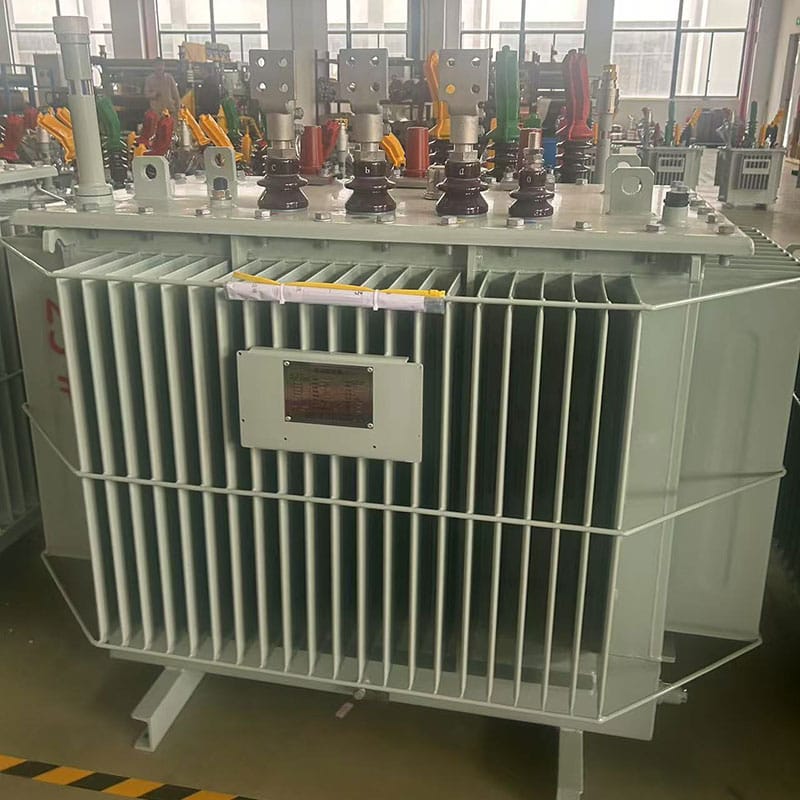
Structure and composition of Oil Immersed Transformer
Oil oil-immersed transformer is mainly composed of the following key components:
- Core: As the magnetic circuit part of the transformer, the core is usually stacked with high-permeability silicon steel sheets. Silicon steel sheets have low hysteresis loss and low eddy current loss, which can effectively guide and concentrate the magnetic field and improve the electromagnetic conversion efficiency. The stacking method can reduce the eddy current loss of the core because there is an insulating layer between each silicon steel sheet, which prevents the eddy current from flowing over a large area in the core. There are two types of core structures: core type and shell type. The core type has a simple structure, and the winding assembly and insulation treatment are relatively convenient. It is the most widely used in power transformers; the shell-type core has a higher mechanical strength and is often used in some special occasions, such as electric furnace transformers.
- Winding: The winding is the circuit part of the transformer, which is divided into the primary winding and secondary winding. It is usually made of metal materials with good conductivity, such as copper or aluminum. Depending on the voltage level and capacity of the transformer, the number of turns and wire diameter of the winding will vary. To ensure good insulation performance, the wire of the winding will be wrapped with insulating materials such as paper, enamel, etc. In large oil-immersed transformers, the winding will also adopt special structural designs, such as tangled windings and continuous windings, to improve the winding’s short-circuit resistance and mechanical strength. For example, the tangled winding increases the winding’s reactance by changing the winding connection method, so that the winding can withstand a larger current shock when short-circuited.
- Oil tank: The oil tank is the outer shell of the transformer, usually welded from steel plates, which plays a role in protecting internal components, containing transformer oil, and dissipating heat. To enhance the heat dissipation effect, the surface of the oil tank is usually designed with heat sinks or radiators. Some large transformers also use forced oil circulation cooling, which circulates the transformer oil between the oil tank and the radiator through the oil pump to take away the heat generated by the windings and the core, thereby improving the heat dissipation efficiency. The sealing performance of the oil tank is also very important. A good seal can prevent transformer oil leakage and the intrusion of external impurities and moisture, and ensure the normal operation of the transformer.
- Insulating oil: Insulating oil plays a dual role of insulation and cooling in oil-immersed transformers. It has high dielectric strength and can effectively isolate the electrical connections between windings, windings and cores, and windings and oil tanks to prevent leakage and short circuit accidents. At the same time, the insulating oil has a large specific heat capacity, which can absorb the heat generated by the windings and cores, and transfer the heat to the oil tank wall and radiator through convection and heat conduction, and dissipate it to the surrounding environment. Commonly used insulating oils include mineral oil, synthetic ester oil, etc. Different types of insulating oils have slightly different performances. For example, mineral oil is relatively cheap and widely used; synthetic ester oil has better environmental performance and a higher ignition point, and is suitable for some occasions with high fire protection requirements.
- Other components: In addition to the above main components, oil-immersed transformers also include some other important components. For example, the oil pillow is used to adjust the volume change of transformer oil due to temperature changes, keep the oil tank full of oil, and reduce the contact area between oil and air, slowing down the oxidation rate of oil; the gas relay is used to monitor the fault inside the transformer. When a short circuit, local overheating, or other faults occur inside the transformer, gas will be generated. After detecting the gas, the gas relay will send a signal or trip to protect the transformer; the insulating bushing is used to lead out the high and low voltage winding leads of the transformer, so that the leads are well insulated from the oil tank and fixed.
Significant advantages of Oil Immersed Transformer
- Efficient heat dissipation
In various types of transformers, heat dissipation has always been a key factor affecting their performance and life. Oil-immersed transformer performs well in heat dissipation. The transformer oil inside it can quickly absorb the heat generated by the core and winding, just like an efficient heat collector. Due to the fluidity of the oil, the heat will be transferred to the tank wall and the radiator as the oil circulates, and then dissipated into the surrounding environment. This heat dissipation method is much more efficient than some dry-type transformers that only rely on air convection to dissipate heat. For example, in some large industrial substations, oil-immersed transformers can operate stably, and even under high load, the temperature can be controlled within a reasonable range to ensure the continuous and stable operation of the equipment. - Excellent insulation performance
Insulation performance is an important guarantee for the safe operation of transformers. The transformer oil in the Oil Immersed Transformer has a high dielectric strength and can effectively isolate the electrical connections between windings, windings and cores, and windings and oil tanks. Taking oil-immersed transformers with voltage levels of 110kV and above as an example, their insulating oil can withstand extremely high voltages without being broken down, greatly reducing the probability of leakage and short-circuit accidents. At the same time, transformer oil can also prevent moisture and impurities in the air from entering the transformer, further ensuring the stability of insulation performance. - Large capacity range adaptability
Different power systems and power consumption scenarios have different capacity requirements for transformers. Oil-immersed transformer has a wide range of capacity, from tens of kVA for small distribution transformers to hundreds of MVA or even higher for large power transformers. In urban power grids, small oil-immersed distribution transformers can meet the low-capacity power needs of residential areas, commercial places, etc., while in large power plants and transmission networks, large-capacity oil-immersed transformers can take on the heavy task of high-voltage transmission and large-capacity substations. - Economic cost advantage
From a cost perspective, the oil-immersed transformer has certain advantages in both initial investment and long-term operation and maintenance costs. Its manufacturing process is relatively mature, and the cost of raw materials is relatively low, making the initial purchase cost more competitive. During operation, the maintenance cost of oil-immersed transformers is also low. Due to its relatively simple structure and certain self-protection and self-repair capabilities of transformer oil, as long as regular oil quality testing and simple maintenance are performed, its long-term stable operation can be guaranteed. Compared with some transformers with complex cooling and insulation systems, the operation and maintenance costs of oil-immersed transformers are significantly lower.
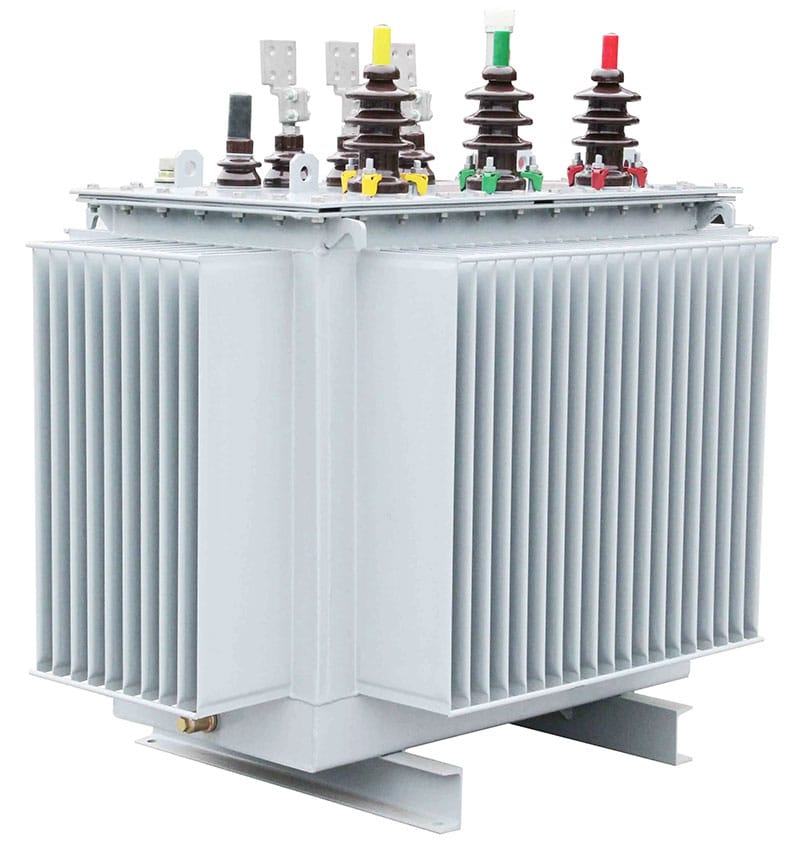
Comparative Analysis with Dry-Type Transformers
Cooling Method and Heat Dissipation Efficiency
Oil-immersed transformer mainly relies on insulating oil for cooling. The heat generated by the transformer during operation is absorbed by the insulating oil and then dissipated through the oil tank wall and radiator. This cooling method is highly efficient and can effectively control the temperature of the transformer during high-load operation. For example, in large substations, even if the transformer is in full-load operation for a long time, the oil-immersed transformer can keep the temperature within a safe range through a good heat dissipation system.
Dry-type transformers are mainly cooled by air convection, and for large-capacity dry-type transformers, fan-assisted cooling is also used. Although air cooling is simple, its heat dissipation efficiency is relatively low compared to the oil circulation cooling of oil-immersed transformers. When operating at high load, the temperature of the dry-type transformer rises rapidly, requiring more stringent temperature monitoring and heat dissipation measures. For example, to ensure their stable operation under high load, the dry-type transformers used in some data centers need to be equipped with a special air conditioning system to assist in heat dissipation, which increases operating costs and complexity.
Insulating medium and performance
Oil-immersed transformers use insulating oil as the main insulating medium. Insulating oil has high dielectric strength and can effectively isolate the electrical connections between windings, windings and cores, and windings and oil tanks, providing reliable insulation protection. At the same time, insulating oil can also prevent moisture and impurities in the air from entering the transformer to a certain extent, further ensuring the stability of insulation performance.
Dry-type transformers use solid insulating materials such as epoxy resin and silicone rubber. These materials have good insulation properties and are environmentally friendly, safe, and fireproof. However, solid insulating materials age relatively quickly, and their insulation properties may be affected in harsh environments such as high temperatures and humidity. In contrast, insulating oil has relatively stable performance and a long service life under normal use conditions.
Applicable environment adaptability
The oil tank of the Oil Immersed Transformer can provide additional protection for internal components, making it highly resistant to harsh environments. It can be installed outdoors and can operate normally even in harsh weather conditions such as wind, sand, rain, and snow. For example, in transmission lines in remote areas, oil-immersed transformers can adapt to complex natural environments and ensure stable transmission of electricity.
Dry-type transformers have high environmental requirements and need to avoid damage to insulation materials caused by factors such as moisture and dust. It is more suitable for installation in indoor environments, such as commercial buildings and distribution rooms in residential areas. In these environments, dry-type transformers can take advantage of low noise and simple maintenance.
Daily maintenance and troubleshooting
Daily maintenance points
- Oil temperature inspection: Oil temperature is an important indicator reflecting the operating status of oil-immersed transformers. Generally speaking, the transformer will be equipped with a temperature measuring tank inserted into the transformer oil on the top of the casing. The transformer oil temperature is measured by setting a temperature measuring element in it. We usually call it the top oil temperature of the transformer. The operator should record the oil temperature regularly and compare it with the normal operating temperature range of the transformer. For example, in some substations with voltage levels of 110kV and above, the upper limit of the transformer upper oil temperature will be specified, such as 85℃ as the limit. When the upper oil temperature reaches above 80℃, an alarm signal will be issued. During routine maintenance, if the oil temperature is found to be more than 10℃ higher than usual, or the load remains unchanged but the temperature continues to rise, while the cooling device operates normally, it may indicate that the transformer has an internal fault.
- Oil level monitoring: The normality of the oil level is directly related to the insulation and cooling effect of the transformer. Transformers are usually equipped with an oil level gauge to display the oil level. The oil level gauge is marked with temperature scales of -30℃, +20℃, and +40℃ on one side. These scales indicate the ambient temperature when the transformer is running, and the oil level must be consistent with the corresponding ambient temperature. During daily inspections, check whether the oil level is within the normal range. If the oil level is too low, there may be oil leakage in the transformer. It is necessary to find the leakage point in time and deal with it, because a severe oil shortage will expose the transformer’s core and winding to the air, which is not only easy to be damp and reduce insulation, but also may cause insulation breakdown. If the oil level is too high, it may be caused by too high oil temperature or too much gas in the oil, and the cause needs to be further checked.
- Appearance inspection: A comprehensive inspection of the appearance of the transformer is also an important part of daily maintenance. This includes checking whether there are leaks in the oil tank, oil storage cabinet, bushing, cooling device, connecting pipe, valve, flange and weld; whether the bushing is damaged, cracked, oily, with discharge marks or other abnormal phenomena; whether there are foreign objects on the wires, joints and busbars, whether the lead joints and busbars are hot, whether the wires are loose or broken, etc. For example, during a routine inspection, the staff found that there were slight discharge marks on the surface of the bushing of an oil-immersed transformer. After further inspection and analysis, it was determined that the bushing surface was dirty and partial discharge occurred under the action of high voltage. The bushing was cleaned and processed in time to avoid further expansion of the fault.
- Sound monitoring: A normally operating oil-immersed transformer will emit a uniform humming sound. During daily maintenance, the operator should pay attention to monitoring the operating sound of the transformer. If the sound is abnormal, such as sharp calls, uneven noise, or other abnormal sounds, it may indicate that there is a fault inside the transformer, such as a loose core, short-circuited winding, etc. For example, when the insulation between the silicon steel sheets of the transformer core is damaged, the core vibration will intensify, thus making an abnormal sound. Once the sound is abnormal, a detailed inspection should be carried out in time. If necessary, professional detection equipment, such as a transformer partial discharge detector, can be used to further detect and analyze the transformer.
Common troubleshooting methods
- Gas protection action troubleshooting: Gas protection is one of the important protection devices of oil-immersed transformers. When a fault occurs inside the transformer, such as winding short circuit, multi-point grounding of the core, etc., gas will be generated. After the gas relay detects the gas, it will send a signal or trip. When the gas protection is activated, the nature and quantity of the gas in the gas relay should be checked first. If the gas is colorless, odorless, and non-flammable, it may be a slight overheating phenomenon inside the transformer; if the gas is yellow and flammable, it may be a more serious fault inside the transformer, such as winding insulation damage. At the same time, a comprehensive analysis should be conducted in combination with other parameters such as the oil temperature, oil level, and operating sound of the transformer to determine the cause and severity of the fault.
- Winding fault troubleshooting: Winding is a key component of the transformer, and a winding fault may cause the transformer to fail to operate normally. Common winding faults include inter-turn short circuit, inter-layer short circuit, etc. When troubleshooting winding faults, you can judge by measuring the DC resistance of the winding. Under normal circumstances, the DC resistance of the three-phase winding should be balanced. If the DC resistance of a phase winding deviates greatly from the other two phases, it may indicate that the phase winding has a fault. In addition, the winding can also be tested with a transformer winding deformation tester to detect whether the winding is deformed. For example, during a transformer overhaul, by measuring the DC resistance of the winding, it was found that the resistance value of a phase winding was significantly larger. Further inspection found that the phase winding had an inter-turn short circuit fault. The faulty winding was repaired in time to ensure the normal operation of the transformer.
- Insulation fault troubleshooting: Insulation performance is an important guarantee for the safe operation of the transformer. Insulation faults may cause serious accidents such as leakage and short circuits. When troubleshooting insulation faults, you can judge by testing the insulation performance of the transformer oil, such as measuring the breakdown voltage and dielectric loss factor of the transformer oil. If the insulation performance of the transformer oil decreases, it may be caused by oil contamination, moisture, or aging. In addition, the insulation resistance of the transformer can also be measured. Use an insulation resistance tester to measure the insulation resistance of winding to winding, winding to core, core to ground, and other parts. If the insulation resistance value is lower than the specified value, it means that there may be an insulation fault. For example, an oil-immersed transformer had an abnormal discharge during operation. By testing the insulation performance and insulation resistance of the transformer oil, it was found that the breakdown voltage of the transformer oil was significantly reduced, and the insulation resistance was also greatly reduced. It was finally determined that the insulation performance decreased due to the long-term operation of the transformer and the aging of the insulating oil, which caused the insulation fault.
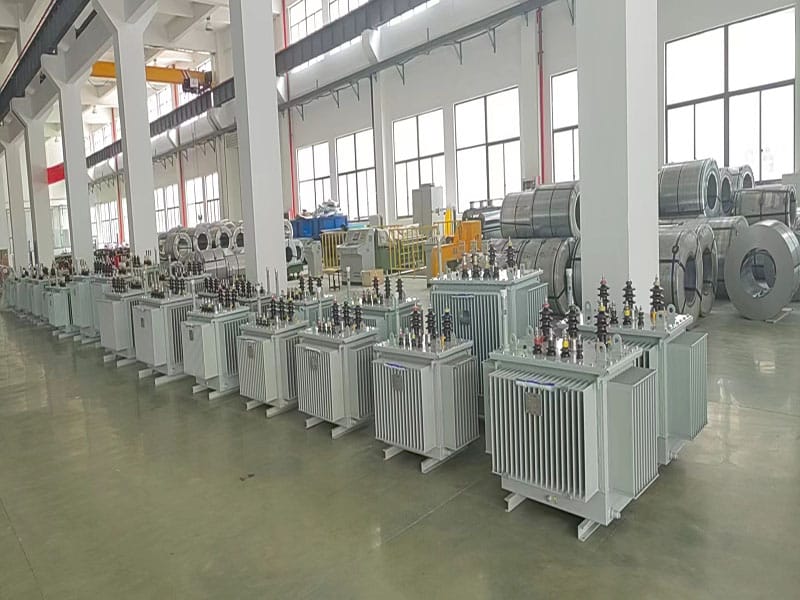
Choose the right Oil Immersed Transformer
Choosing the right Oil Immersed Transformer is crucial for the stable operation of the power system and needs to be considered from many aspects.
Clarify your own needs
Determine the capacity and voltage level of the transformer according to the actual power consumption scenario. For example, residential power distribution usually uses oil-immersed transformers with a capacity of several hundred kVA to 1MVA and a voltage level of 10kV/0.4kV; while large industrial enterprises, such as steel mills and chemical plants, may require transformers with a capacity of several MVA or even dozens of MVA and a higher voltage level due to large power loads. At the same time, the characteristics of the load should be considered, whether it is a resistive load, an inductive load or a capacitive load. Different load characteristics have different requirements for transformers. For example, when an inductive load is started, a large inrush current will be generated, which requires the transformer to have a good overload capacity.
Pay attention to technical parameters
- No-load loss and load loss: No-load loss is the power loss of the transformer when it is running at no load, which is mainly composed of hysteresis loss and eddy current loss of the core; load loss is the resistance loss in the winding and stray loss caused by leakage when the transformer is running with load. Low-loss transformers can reduce operating costs and improve energy efficiency. When choosing products, products that meet national energy efficiency standards should be given priority, such as my country’s S13 series oil-immersed transformers, which have significantly reduced no-load loss and load loss compared to the traditional S9 series.
- Short-circuit impedance: Short-circuit impedance is an important parameter of the transformer, which reflects the performance of the transformer under short-circuit conditions. The larger the short-circuit impedance, the smaller the short-circuit current of the transformer when it is short-circuited, and the smaller the impact on the transformer and the power system, but at the same time, it will increase the voltage regulation rate of the transformer and affect the stability of the voltage. Therefore, it is necessary to reasonably select the short-circuit impedance value according to actual needs. Generally speaking, for occasions with large load changes, the short-circuit impedance can be appropriately selected to be smaller to ensure voltage stability; for occasions with large short-circuit current, the short-circuit impedance should be selected to be larger to limit the short-circuit current.
- Insulation level: The insulation level is directly related to the safe operation of the transformer. Transformers of different voltage levels have corresponding insulation standards. When selecting, it is necessary to ensure that the insulation level of the transformer meets the requirements of the actual use environment and voltage level. For example, transformers used in harsh environments such as humid and dusty environments should have higher insulation levels and protection performance.
Choosing a reliable supplier
Choosing a supplier with a good reputation and rich experience is the key to ensuring product quality and after-sales service. Suppliers of well-known brands usually have advanced production equipment, strict quality control systems, and professional technical teams, and can provide high-quality products. Internationally renowned brands such as Siemens and ABB, as well as large domestic enterprises such as TBEA and China XD, have a good reputation in the industry and reliable product quality. At the same time, it is necessary to understand the supplier’s after-sales service capabilities, including whether it provides timely technical support, maintenance services, and the supply of spare parts. Good after-sales service can reduce equipment downtime and lower operating costs. You can conduct a comprehensive assessment of suppliers by checking their customer reviews, case references, and consulting industry insiders.

 English
  Russian
  French
  German
  Spanish
  Arabic