
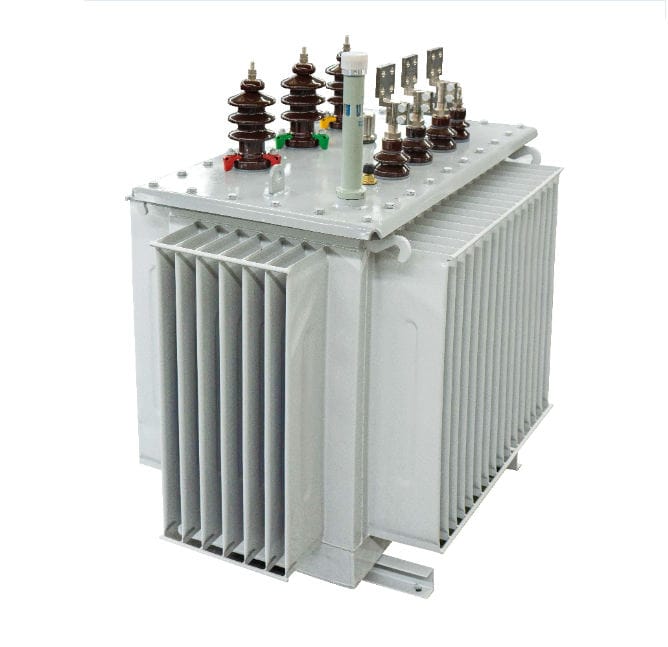
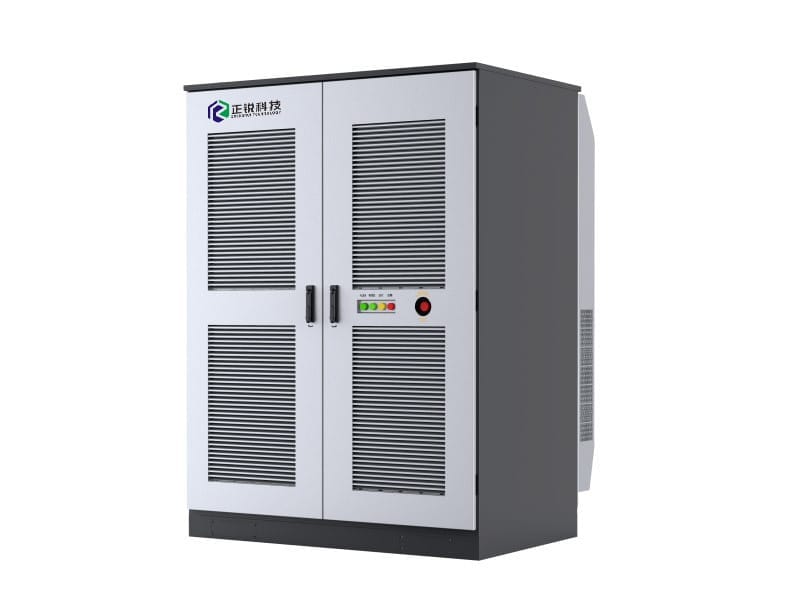
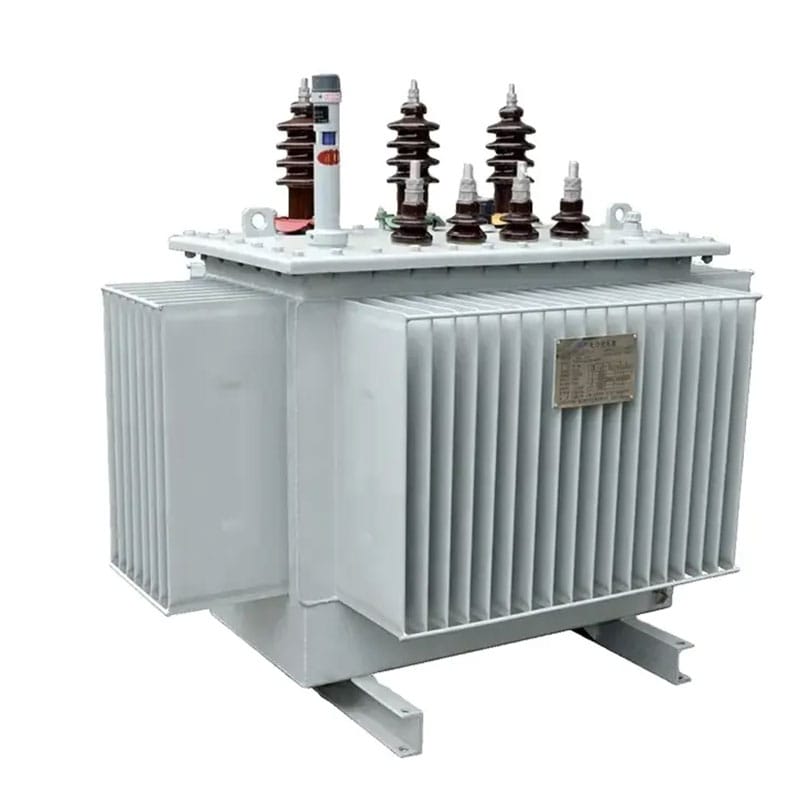
The transformer is a major power transmission and conversion apparatus in the installation, and its safe operation ensures an equally safe and secure power grid. Two common equipment in modern power installations are dry-type transformers and oil-immersed transformers. They have wide applications due to differences in aspects such as structure, cooling methods, and applicable environments.
Basic definition and structural comparison
Dry-type transformer means a transformer whose winding is not placed in an insulating liquid. Its cooling and insulation mostly depend on air and resin materials, it has good environmental performance. Its major structure comprises an iron core, winding, insulation layer, and shell. The windings are usually encapsulated by epoxy resin casting. The whole is very compact, easy to transport, and install.
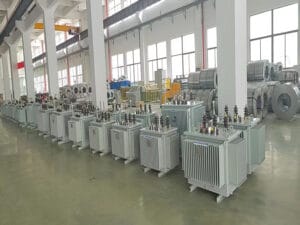
In an oil-immersed transformer, the iron core and winding are immersed in insulating oil, and heat dissipation and insulation are achieved through the circulation of oil. Such a structure can effectively reduce the temperature rise, which is quite an efficient system in improving voltage resistance performance, applicable for systems with high capacity and high voltage levels.
| Item | Dry-Type Transformer | Oil-Immersed Transformer |
|---|---|---|
| Cooling Medium | Air / Forced Air Cooling | Insulating Oil |
| Insulation Method | Epoxy Resin or Polyester Varnish | Oil and Paper Composite Insulation |
| Fire Resistance | High | Lower Risk of Oil Combustion |
| Installation Location | Indoor | Outdoor or Independent Transformer Room |
| Environmental Impact | Non-polluting, Environmentally Friendly | Possible Oil Leakage and Pollution |
| Size and Weight | Compact Size, Light Weight | Large Size, Heavy Weight |
Cooling method of transformers
Most dry-type transformers use natural air cooling (NA) or forced air cooling (AF). The fan creates a flow of air around the winding to remove heat. Its cooling effect is limited by the environmental ventilation conditions, and thus it is suitable for places with stable loads and good heat dissipation conditions.
The major cooling methods of oil-immersed transformers are ONAN (natural oil circulation + natural air), ONAF (natural oil + strong air), OFAF (forced oil circulation + forced air cooling), and so on. The hot oil in the transformer creates a flow of closed loop under the action of gravity and heat exchange; this greatly improves the efficiency of heat dissipation and is suitable for long-term, continuous high-load operation.
Capacity and voltage adaptation range
The capacity of a dry-type transformer normally ranges between 100kVA and 30MVA, with voltage levels of 10kV to 35kV for small and medium power distribution systems. Restrictions due to cooling and insulation limits make it unfeasible for ultra-high voltage or large power generation systems.
Oil-immersed transformers can be used in power systems of all voltages, from very low up to extra high voltages. It is applicable for all rated powers, starting from the smallest up to the largest rating. However, regarding the limitation on installation space, this type is more suited for extra-high-voltage power systems.
Oil-immersed transformers comprise all application scenarios from the distribution level to the main transformer level. It has a wide range of capacities, 100kVA to 1000MVA, and a voltage level of more than 500kV. In ultra-high voltage and UHV transmission systems, they are placed optimally and cannot be replaced by any other equipment.
Operation and maintenance, and life comparison
| Item | Dry-Type Transformer | Oil-Immersed Transformer |
|---|---|---|
| Maintenance Frequency | Low | Higher (Requires oil level and quality checks) |
| Maintenance Complexity | Simple | More Complex |
| Service Life | 20–25 Years | Over 30 Years |
| Failure Rate | Low, More Stable Due to No Oil | Higher Risk of Oil Aging or Leakage |
Safety and environmental protection characteristics
Safety advantages of dry-type transformers
Due to the absence of oil medium, dry-type transformers have obvious advantages in high temperature, open flame, and flammable environments. They are not prone to explosion or fire, and are particularly suitable for densely populated areas, underground facilities, and high-rise buildings.
Protection measures for oil-immersed transformers
Although oil-immersed transformers have the risk of oil leakage and explosion, their operating safety can be effectively improved by installing oil tank explosion-proof valves, oil pillows, gas relays, and other devices. At the same time, modern technology has made great progress in oil purification and leak-proof design, and environmental protection performance has been greatly improved.
Application scenario details
| Application Scenario | Recommended Transformer Type | Reasoning |
|---|---|---|
| Urban Rail Transit | Dry-Type Transformer | Limited space, high environmental standards |
| Hospitals, Shopping Malls | Dry-Type Transformer | Low noise, fireproof, and explosion-proof, suitable for indoor use |
| Industrial Plants | Oil-Immersed Transformer | High load, long operation hours, suitable for efficient heat dissipation |
| High-Voltage Substations | Oil-Immersed Transformer | High-voltage and large-capacity, dry-type transformers cannot meet technical demands |
| Data Centers | Dry-Type Transformer | High fire resistance required, easy to deploy, and replace |
Economic cost and comprehensive cost performance
The initial investment of dry-type transformers is higher than that of oil-immersed transformers, but the subsequent maintenance cost is lower; although the investment of oil-immersed transformers is smaller, they need to be equipped with fire protection systems and regular maintenance. If evaluated from the perspective of a 20-30 year life cycle, the difference in the total cost of ownership between the two is not significant, and the main priority should be based on scene adaptability.
Technology development trend
In recent years, with the development of new material technology and intelligent manufacturing, dry-type transformers and oil-immersed transformers have continued to make progress in the following aspects:
- Intelligent monitoring system: Real-time monitoring of operating status through temperature sensors and oil quality detectors;
- New insulation materials: Dry-type transformers use nano-resins, and oil-immersed transformers use environmentally friendly oil instead of mineral oil.
- Noise control technology: Through low-noise fans and core magnetic circuit optimization, the operating noise is greatly reduced.
- Green and environmentally friendly design: Wide application of halogen-free materials and recyclable components;
Driven by the “dual carbon” policy, more attention will be paid to the research and development of environmental protection, energy efficiency level, and long-life products in the future.
Summary and selection suggestions
In general, dry-type transformers and oil-immersed transformers have their advantages, and the differences in adaptability are mainly reflected in the structure, cooling method, and application environment.
Dry-type transformers are suitable for:
- Indoor spaces such as high-rise buildings, subways, and airports;
- Facilities with clear requirements for fire and explosion prevention;
- Places that are inconvenient to maintain and require unattended operation;
Oil-immersed transformers are suitable for:
- Heavy-load environments such as industrial and mining enterprises, wind farms, and photovoltaic power stations.
- Power transmission and transformation backbone networks, large distribution stations;
- Applications with high capacity and voltage requirements;
In the selection process, cost, space, safety, maintenance, and load characteristics should be comprehensively considered to ensure that the transformer is highly compatible with the project requirements, thereby achieving safe, efficient,t and economical operation of the system.

 English
  Russian
  French
  German
  Spanish
  Arabic