
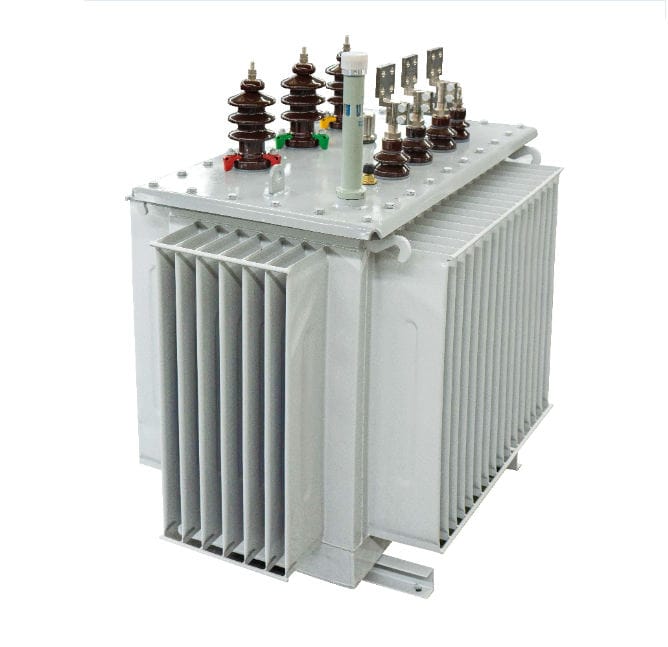
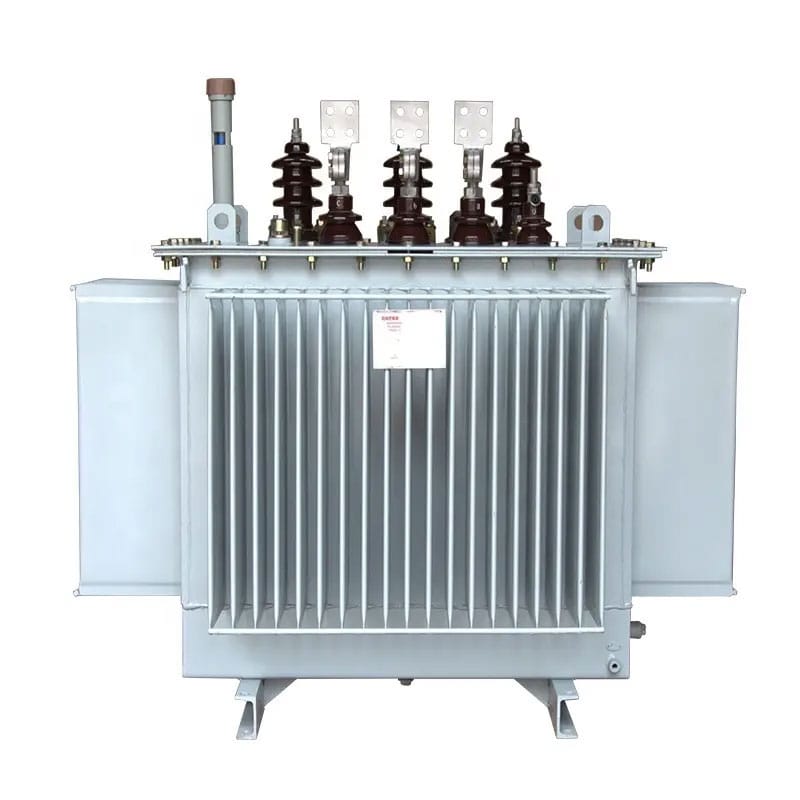
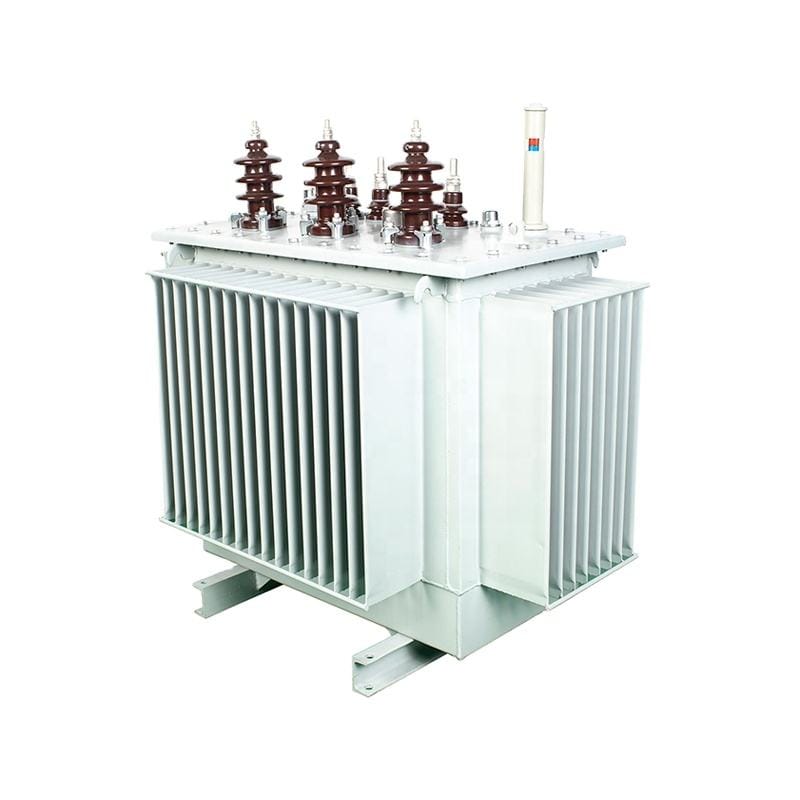
Have you ever wondered what device is quietly ensuring a stable power supply when you’re working late at night with your desk lamp casting a soft glow, or when you’re shopping in a mall and the central air conditioning keeps you cool? The answer might be hiding in an unassuming corner—the dry-type transformer. In modern power transmission and distribution systems, it’s truly an “unsung hero,” shouldering the crucial task of transforming voltage as needed and guaranteeing efficient and stable power transmission. Today, let’s take an in-depth look at this behind-the-scenes powerhouse in the electrical world.
Unveiling the Mysteries of Dry-Type Transformers
Definition and Basic Principles
From its name, you can see the distinctive features of a dry-type transformer. Its windings aren’t immersed in insulating liquid; instead, it uses solid insulating materials, which gives it unique advantages in terms of safety and environmental protection. The working principle operates based on the principle of electromagnetic induction. When alternating current passes through the primary winding of the transformer, it generates an alternating magnetic field in the iron core. This magnetic field then induces an electromotive force in the secondary winding, thus achieving voltage transformation. Simply put, it’s like two interconnected “electrical magic coils,” and through the “magic” of the magnetic field, the voltage changes to meet our requirements.
Structural Analysis
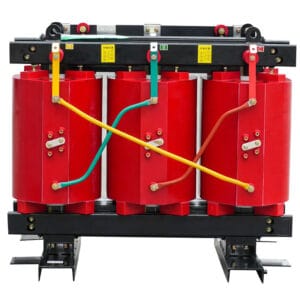
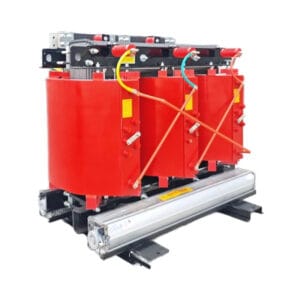
The iron core of a dry-type transformer is one of its core components. It’s usually made of high-quality cold-rolled grain-oriented silicon steel sheets and features a 45-degree fully oblique joint. This design can effectively reduce the hysteresis loss and eddy current loss of the iron core, improve the transformer’s efficiency, and simultaneously reduce the noise during operation.The winding part is the key structure for a dry-type transformer to achieve voltage transformation. It has various winding forms, including cylindrical, spiral, and continuous types. Different winding forms have their characteristics in terms of electrical performance and heat dissipation performance. Common structures for high and low voltage windings include concentric and overlapping types. The concentric winding arranges the high and low voltage windings concentrically around the iron core column, which has the advantages of a simple structure and easy manufacturing. The overlapping winding, on the other hand, arranges the high and low voltage windings alternately, which is beneficial for enhancing the coupling between the windings and reducing leakage flux.
Types and Characteristics of Dry-Type Transformers
- Diverse Types
Dry-type transformers come in a rich variety, with common types including open type, enclosed type, and cast resin type. The open-type dry-type transformer has good ventilation and heat dissipation conditions and is suitable for relatively dry places with less dust. The enclosed-type dry-type transformer completely encloses the transformer, providing excellent protection performance and enabling it to adapt to harsher environments, such as damp places or those with corrosive gases. The cast resin dry-type transformer, meanwhile, has its windings molded with materials like epoxy resin, boasting high mechanical strength and electrical insulation performance, making it one of the most widely used types currently. Additionally, different types of dry-type transformers also vary in cooling methods, mainly natural air cooling and forced air cooling. - Remarkable Advantages
Compared with traditional oil-immersed transformers, dry-type transformers have significant advantages. First and foremost is their high safety. Without insulating oil, there’s no risk of oil leakage, fire, or explosion, making them especially suitable for installation in densely populated areas, such as office buildings, shopping malls, and hospitals. Secondly, they’re highly environmentally friendly and energy-efficient. The solid insulating materials don’t pollute the environment, and their low losses during operation align with the current concept of green development. Moreover, dry-type transformers are easy to maintain. Thanks to their relatively simple structure, the workload for daily inspections and maintenance is relatively small. In addition, their installation is very flexible. With a small size and light weight, they can be directly installed at the load center, reducing power transmission losses. Finally, dry-type transformers also offer
high efficiency and can maintain good operating performance across a wide range of loads. - Discussion on Limitations
Of course, dry-type transformers aren’t perfect either. Their cost is relatively high, mainly due to the high cost of the solid insulating materials and special manufacturing processes they use. Additionally, dry-type transformers have relatively weaker heat dissipation capabilities compared to oil-immersed transformers. In high-temperature environments or during high-load operation, more effective heat dissipation measures are needed to ensure their normal operation. However, with the continuous advancement of technology, these limitations are gradually being overcome.
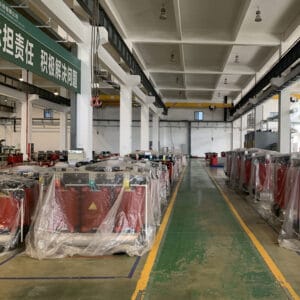
A Wide Range of Application Fields
- Construction Field
In the construction field, dry-type transformers are the well-deserved “power guardians.” Whether it’s a towering skyscraper, a large commercial complex, or an underground parking lot, they’re indispensable. They supply stable power to the lighting systems, air conditioning systems, elevator systems, and more within buildings. In the densely populated environment of buildings, the safety and environmental protection features of dry-type transformers are particularly important as they can effectively prevent safety accidents caused by transformer failures and protect people’s lives and property. - Industrial Sector
In industrial production, dry-type transformers also play an irreplaceable role. Power lighting, motor drives, automation equipment, and other aspects in factories, workshops, power plants, and other places all rely on dry-type transformers to provide the appropriate voltage. They can adapt to the complex and changing load requirements in industrial environments. Whether it’s the high current surge when starting large motors or the regular load during continuous stable operation, dry-type transformers can stably output power to ensure the smooth progress of industrial production. - Transportation Sector
In the transportation field, dry-type transformers also play a vital role. In the power supply systems of high-speed railways, subways, and other rail transit, dry-type transformers are responsible for converting high-voltage electricity into voltages suitable for train operation and the use of on-station equipment, ensuring the normal operation of trains and the stable power supply for on-station lighting, ventilation, and signal systems. In addition, in transportation scenarios such as ports and ships, dry-type transformers are also used in power supply and distribution systems to provide reliable power for port loading and unloading equipment, ship power systems, and domestic electricity. - Other Scenarios
In addition to the main fields mentioned above, dry-type transformers are also applied in scenarios such as power supply for some small terminal devices. For example, in places like precision instrument equipment and data centers, dry-type transformers can provide stable and clean power to meet the high requirements of these devices for power quality.
Performance Assurance and Technological Upgrades
- Temperature Control
Temperature is one of the key factors affecting the performance and lifespan of dry-type transformers. To ensure the safe and stable directly measure the temperature inside the windings with high accuracy, while surface temperature measurement indirectly reflects the internal temperature by measuring the temperature of the transformer’s outer shell. When the temperature exceeds the set threshold, the temperature control system will issue an alarm signal and activate corresponding cooling measures to prevent the transformer from being damaged due to overheating. - Protection Strategies
According to different usage environments and protection requirements, dry-type transformers need to be selected with appropriate protective enclosures. For example, an IP23 protective enclosure can prevent solid foreign objects with a diameter larger than 12mm from entering and also protect against water spray within an angle of 60 degrees from the vertical, making it suitable for general indoor environments. Different protection levels not only protect the internal components of the transformer from the external environment but also, to a certain extent, ensure personnel safety. However, it should be noted that the protective enclosure will have a certain impact on the heat dissipation of the transformer, which may lead to a reduction in its operating capacity. - Cooling Modes
As mentioned earlier, the cooling modes of dry-type transformers are mainly natural air cooling (NA) and forced air cooling (AF). The natural air cooling method relies on the natural convection and radiation of air for heat dissipation and is suitable for occasions with small loads and low ambient temperatures. This method doesn’t require additional cooling equipment, resulting in low operating costs. Forced air cooling, on the other hand, uses equipment such as fans to force air flow and accelerate heat dissipation. When forced air cooling is employed, the output capacity of dry-type transformers can be increased by 30% – 50%, making it suitable for situations with large loads or high ambient temperatures. - Overload Handling
In actual operation, dry-type transformers may encounter overload situations. Many factors affect the overload capacity of dry-type transformers, including ambient temperature, cooling method, load characteristics, etc. To deal with overloads, we can use the overload curves of dry-type transformers to determine their operating conditions under different overload multiples and overload times. However, it’s important to emphasize that although dry-type transformers have a certain overload capacity, long-term continuous overload operation should be avoided as it will accelerate the aging of the transformer and shorten its service life.
Development Status and Future Prospects
- Current Situation Insights
In recent years, the global dry-type transformer market has shown a rapid growth trend. According to relevant data, the global dry-type transformer market has been growing at an average annual rate of [X]% in the past few years. In terms of regional distribution, the Asia-Pacific region is the largest dry-type transformer market in the world, accounting for approximately [X]% of the market share. This is mainly due to the rapid development of infrastructure construction and the continuous increase in industrial electricity consumption in countries like China and India. As the largest producer and consumer of dry-type transformers globally, China’s dry-type transformer market reached [X] billion yuan in 2023. Many domestic enterprises have continuously made breakthroughs in technology research and development and manufacturing. Their products not only meet domestic demand but are also exported in large quantities overseas. - Future Trends Outlook
Looking ahead, the development prospects of dry-type transformers are very promising. In terms of energy conservation and low noise, with the increasing requirements for energy efficiency and environmental protection, the research and development of more energy-efficient and quieter dry-type transformers will become an important direction. In terms of reliability, by using new insulating materials and optimizing the design, the reliability and service life of dry-type transformers will be further improved. Environmental protection certification will also become crucial for future development. More and more enterprises will strive to obtain relevant environmental protection certifications to meet market and policy requirements. In addition, with the continuous growth of power demand, dry-type transformers will develop towards larger capacities. The trend of multi-functional integration will also become more evident, for example, integrating transformers with functions such as intelligent monitoring and control. In application fields, in addition to the existing major markets, dry-type transformers will also play a greater role in emerging fields such as new energy and distributed generation.
From an inconspicuous electrical device to a “power star” widely used in various fields today, dry-type transformers have occupied a pivotal position in modern power systems with their unique advantages. Whether it’s ensuring the power supply for our daily lives, promoting the development of industrial production, or facilitating the efficient operation of the transportation sector, dry-type transformers have made significant contributions. With the continuous advancement of technology and changes in market demand, I believe dry-type transformers will continue to innovate and develop, providing more reliable, efficient, and environmentally friendly power support for our lives and social progress. The next time you enjoy the convenience brought by electricity, take a moment to think about these unsung heroes in the electrical world—the dry-type transformers!

 English
  Russian
  French
  German
  Spanish
  Arabic