
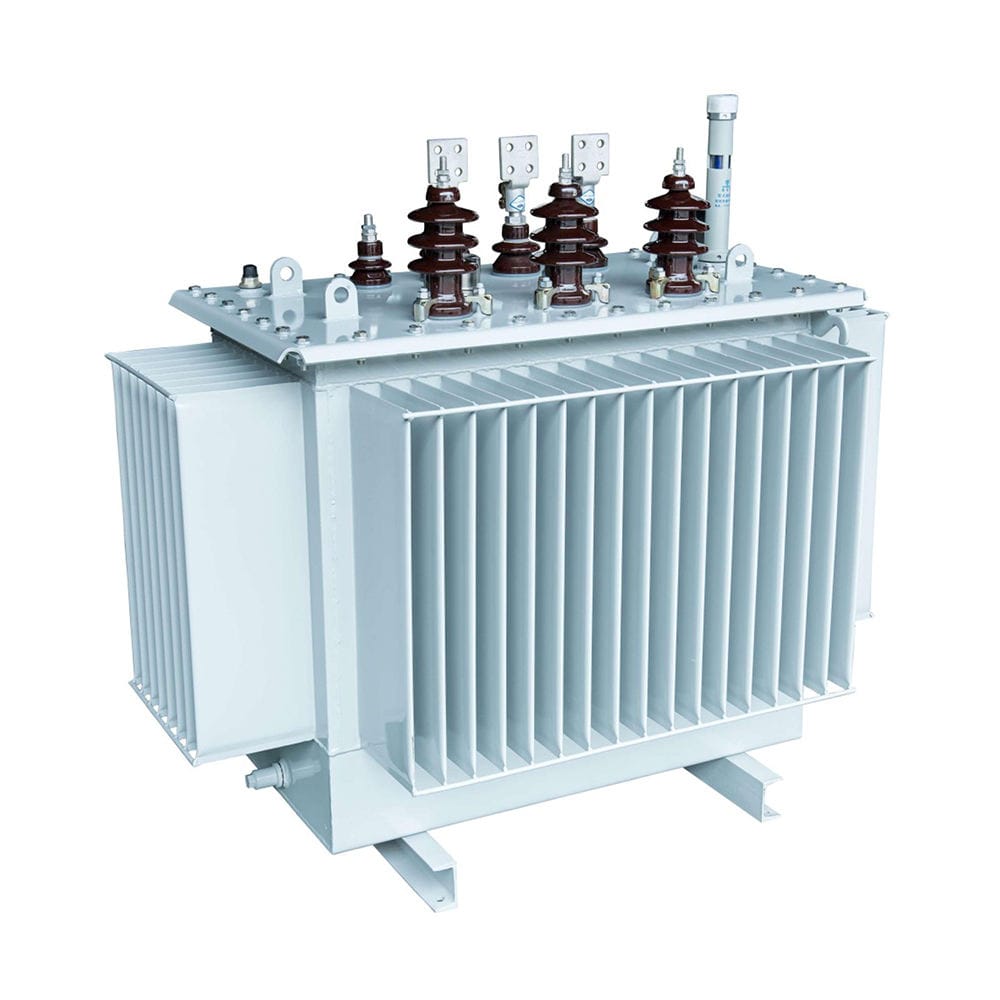

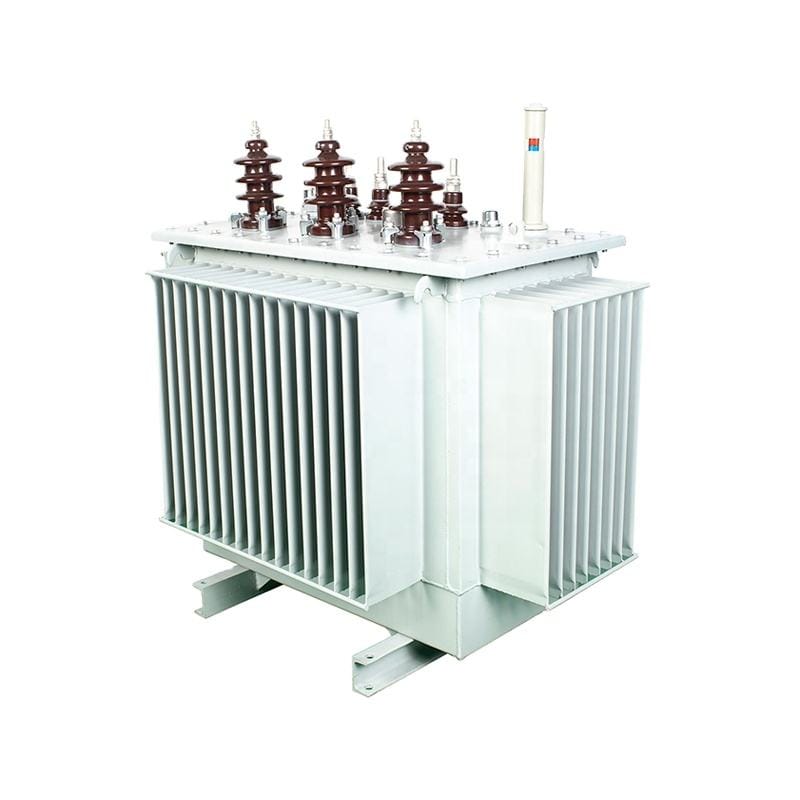
At present, the application field of dry type transformers is very wide and very common. It has become an indispensable component in modern power systems. This article introduces the size, specifications, types, etc. of dry-type transformers in detail. If you also have a demand for dry-type transformers, you can come to this article to learn about it!
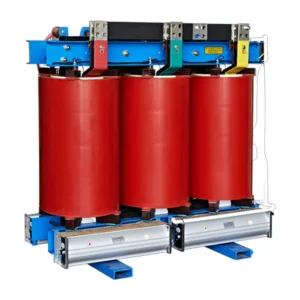
What is a Dry Type Transformer?
A Dry Type Transformer is a power transformer that uses air as the cooling medium instead of insulating oil. Unlike oil-immersed transformers, its windings and core are enclosed in a sealed, air-insulated environment, ensuring safe and eco-friendly operation without risk of leakage, fire, or environmental contamination. Dry Type Transformers are widely used in commercial buildings, hospitals, schools, substations, and indoor industrial environments where fire safety and minimal maintenance are crucial.
Common Dry Type Transformer Sizes
Dry Type Transformers are typically housed in standardized enclosures. Some of the common size ranges (L×W×H in mm) are as follows:
| Rated Power (kVA) | Dimensions (L×W×H) |
| 100–250 | 800 × 600 × 900 |
| 400–630 | 1000 × 800 × 1100 |
| 800–1250 | 1200 × 900 × 1300 |
| 1600–2000 | 1500 × 1100 × 1500 |
| 2500+ | 1800 × 1300 × 1700 |
These are approximate dimensions and may vary based on design, voltage level, and manufacturer.
Standard Dry Type Transformer Specifications
| Parameter | Typical Range |
| Rated Voltage (Primary) | 6kV / 10kV / 11kV / 20kV / 35kV |
| Rated Voltage (Secondary) | 400V / 690V / 3.3kV |
| Rated Capacity | 30 kVA to 3150 kVA |
| Frequency | 50 Hz or 60 Hz |
| Impedance Voltage | 4%–10% |
| Insulation Class | F / H / B |
| Protection Class | IP20 / IP23 / IP44 |
| Cooling Type | AN / AF |
Clearance Requirements for Dry Type Transformers
Proper clearance ensures adequate air circulation and safety. General guidelines include:
- Top Clearance: ≥ 300 mm (to facilitate heat dissipation)
- Side Clearance: ≥ 200 mm (for ventilation)
- Rear Clearance: ≥ 150 mm (for cable connection and inspection)
- Front Clearance: ≥ 800 mm (for operation and maintenance)
Note: If the transformer is installed in a closed cabinet or room, ventilation fans or ducts are recommended.
Types of Dry Type Transformers
Dry Type Transformers can be categorized based on insulation and application:
| Type | Description |
| Cast Resin Transformer (CRT) | Windings encapsulated in epoxy resin, high mechanical strength, flame retardant |
| Vacuum Pressure Impregnated (VPI) | Windings impregnated with varnish under vacuum, better moisture resistance |
| Open Wound Transformer | No resin coating, more economical, used in controlled indoor environments |
| Encapsulated Transformer | Fully enclosed for protection against dust and moisture |
Cooling Methods of Dry Type Transformers
Dry Type Transformers rely on air circulation. There are two primary methods:
- AN (Air Natural): Cooling through natural air flow around the transformer body.
- AF (Air Forced): Cooling using forced airflow from external fans to increase capacity and reduce temperature.
Cooling Class Categories (IEEE/NEMA Standards)
| Cooling Class | Description |
| AA | Air-cooled, natural convection, no fans |
| FA | Fan-assisted air cooling |
| AA/FA | Dual-mode, with optional fan assistance |
| ANAF | Air Natural/Air Forced |
| KNAN/KNAF | For hermetically sealed or partially enclosed transformers |
Rated Power of Dry Type Transformers
The rated power defines the maximum continuous load the transformer can handle under standard conditions without overheating. Common ratings include:
- Low Voltage: 30 kVA – 250 kVA
- Medium Voltage: 250 kVA – 2500 kVA
- High Capacity: Up to 5000 kVA for customized industrial units
Capacity of Dry Type Transformers
Capacity requirements vary by installation:
- Residential/Commercial: 100 – 630 kVA
- Hospital/School/Data Center: 800 – 1600 kVA
- Substation/Industrial Plant: 2000 – 3150+ kVA
Always consider load factor, harmonic content, and ambient temperature in selection.
How to Connect a Dry Type Transformer
Dry Type Transformers are typically connected in the following configurations:
- Delta-Star (Δ/Y): Common for three-phase transformers
- Star-Star (Y/Y): When neutral is needed on both sides
- Delta-Delta (Δ/Δ): For balancing unbalanced loads or motors
Connection tips:
- Follow nameplate diagram and manufacturer guidelines
- Ensure correct phase sequence
- Use thermal monitoring relays and overload protection devices
How to Measure Dry Type Transformer Insulation with a Megger
To evaluate insulation resistance:
- Disconnect power completely and discharge windings.
- Set megohmmeter (Megger) to 1000V or 2500V range.
Measure:
- Between HV and LV windings
- Between HV winding and ground
- Between LV winding and ground
- Readings should typically be above 1000 MΩ (may vary based on voltage class and humidity).
- Record results and trend analysis for preventive maintenance.
Safety Note: Only trained professionals should conduct insulation resistance testing.
Difference Between Dry-Type and Oil-Immersed Transformers
| Feature | Dry Type Transformer | Oil-Immersed Transformer |
| Cooling Medium | Air (natural/forced) | Mineral oil |
| Fire Risk | Low | Higher due to flammable oil |
| Maintenance | Low | Requires oil testing, leak checks |
| Installation | Indoor, near people or sensitive equipment | Outdoor or separate room |
| Environmental Risk | Eco-friendly | Oil spill risk |
| Cost | Slightly higher | Generally lower upfront cost |
| Noise Level | Lower | Moderate to high |
Why Use a Dry Type Transformer?
- High Fire Safety: No oil = no fire hazard
- Suitable for Indoor Use: Hospitals, high-rise buildings, data centers
- Environmentally Friendly: No oil leakage or contamination risk
- Low Maintenance: No need to monitor oil parameters
- Compact Design: Ideal for space-limited installations
- Reliable Performance: High short-circuit withstand capacity
Dry Type Transformer market size
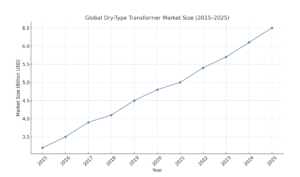
The above figure shows the annual growth trend of the global Dry Type Transformer market (2015-2025):
The market size is expected to reach US$650 million in 2025
Main growth drivers: the rise of data centers, renewable energy, and electric vehicle infrastructure
The market share in Asia and North America continues to expand
Conclusion
Dry Type Transformers have become an essential solution in modern power systems due to their safety, eco-friendliness, and low maintenance. Their ability to operate in enclosed, indoor, and sensitive environments makes them ideal for today’s energy-conscious and space-constrained applications.
Whether for hospitals, schools, data centers, or industrial plants, choosing the right Dry Type Transformer based on capacity, cooling method, and installation environment is vital for efficient and safe power distribution.
As demand for fire-safe and environment-friendly solutions grows, the global Dry Type Transformer market is set to expand further in the coming years—making it a smart, forward-looking investment in any power infrastructure.

 English
  Russian
  French
  German
  Spanish
  Arabic