
Transformers play a vital role in the entire power system. Powerful and versatile, they perform numerous functions, including voltage conversion, energy transmission, and stable grid operation. oil immersed and Dry type transformers are the most common and widely used types, currently found in large power plants and urban distribution systems.
With the trend toward intelligent, green, and energy-efficient power grids, oil immersed and Dry type transformers have become the preferred choice. This article will focus on the differences between oil immersed and Dry type transformers, helping you avoid errors in selection, comparison, and application, and truly understand their differences and value.
What is an oil immersed transformer?
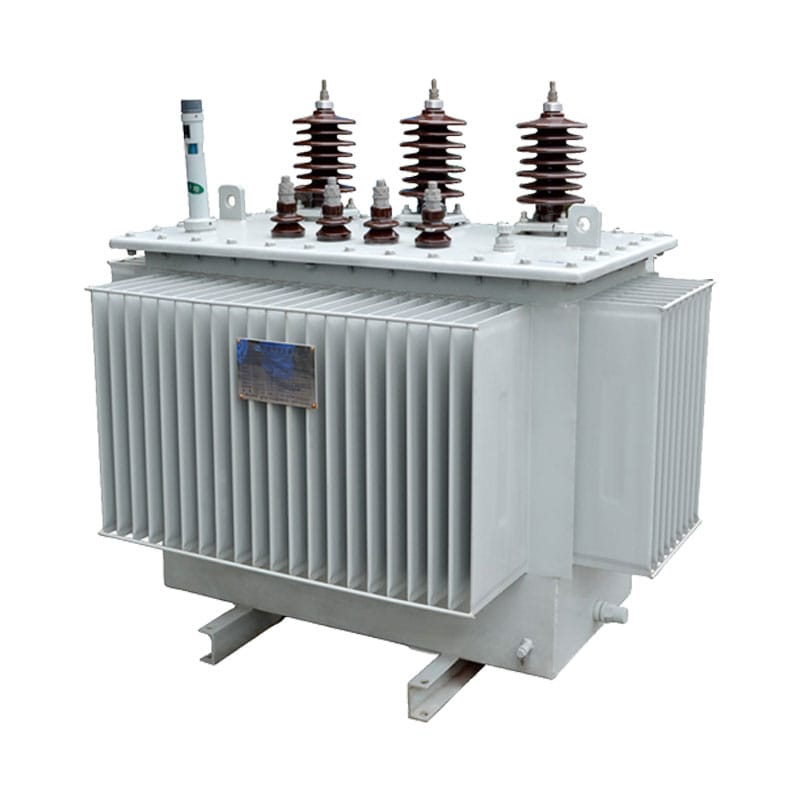
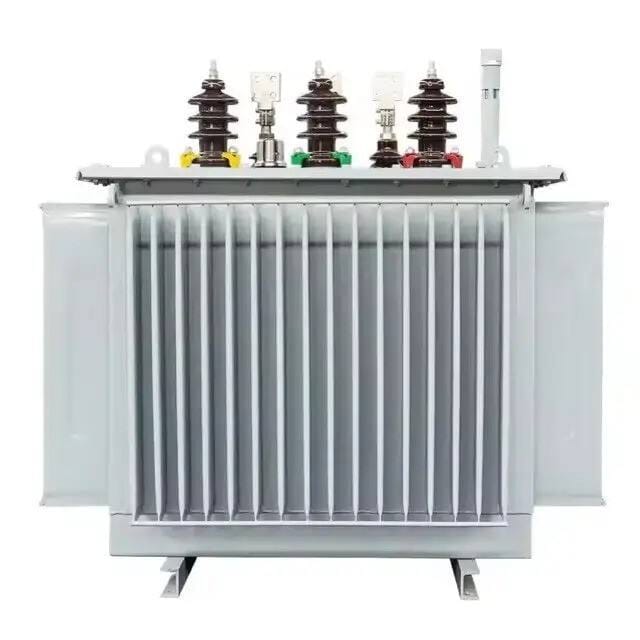
An oil immersed transformer is a power transformer that uses insulating oil as both an insulating and cooling medium. Its internal components primarily consist of an iron core, windings, insulation structure, oil tank, and accessories. During operation, current flowing through the windings generates heat. The insulating oil not only provides electrical insulation but also dissipates the heat, dissipating it through natural convection or circulation, thereby maintaining stable operation.
oil immersed transformers are mature technology with a long history of application. They are currently the most widely used transformer type worldwide, playing an irreplaceable role in medium-, high-voltage, and high-capacity power grid systems.
What is a Dry type transformer?
Dry type transformers use air or other solid insulating materials as cooling and insulation instead of liquid insulating oil. Common structures include epoxy resin cast and VPI (vacuum pressure impregnation) insulation.
Dry type transformers lack an oil medium, eliminating the risks of oil leakage, combustion, and environmental pollution. They are more environmentally friendly and safer, making them particularly suitable for use in public buildings, underground spaces, and densely populated areas. Their disadvantage is their relatively limited capacity and voltage levels. However, with technological advancements, the performance of Dry type transformers continues to improve, and their market application is gradually expanding.
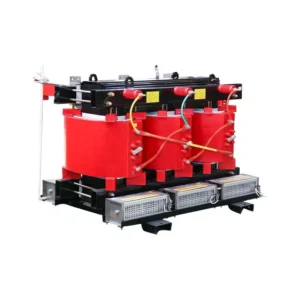
Types of oil immersed and Dry type Transformers
-
oil immersed Transformer Types
Conventional oil immersed: Relies on natural oil circulation for heat dissipation.
Fully sealed: Prevents oil from contact with air, minimizing oil degradation.
Forced oil circulation with air cooling: Suitable for large-capacity equipment, offering faster heat dissipation.
Forced oil circulation with water cooling: Used in ultra-high-capacity applications, such as UHV power grids.
-
Dry type Transformer Types
Epoxy resin cast: Windings are completely encapsulated in resin, providing moisture and dust resistance.
VPI vacuum pressure impregnation: Resin permeability is enhanced, resulting in better insulation.
Non-encapsulated: Cooled by air convection, suitable for applications with less stringent environmental requirements.
Size Range and Design Features
Transformer size varies significantly depending on capacity, voltage level, and cooling method.
Oil immersed Transformers: Typically larger, require an oil tank, cooling pipes, or a radiator, and occupy a larger floor space. Capacities range from tens of kilovolt-amperes to hundreds of megavolt-amperes.
Dry type transformers: Because they eliminate the oil tank, they are more compact and suitable for indoor installations where space is limited. However, their capacities generally range from several hundred kilovolt-amperes to tens of megavolt-amperes.
Dry type transformers offer significant advantages in restricted installation environments, while oil immersed transformers are more economical and reliable for high-power transmission and distribution.
Advantages and disadvantages of oil immersed transformers and Dry type transformers
- oil immersed Transformer
Advantages:
Excellent heat dissipation: Transformer oil effectively dissipates heat, making it suitable for large-capacity, high-voltage applications.
Excellent electrical performance: Oil has high dielectric strength, which improves the overall withstand voltage capability of the equipment.
Long service life: With proper maintenance, it can operate stably for 20–30 years.
Strong overload capacity: Oil cooling is efficient, allowing for good adaptability to grid load fluctuations.
Wide capacity range: Capable of ultra-large capacities (from hundreds of kVA to hundreds of MVA).
Disadvantages:
Risk of oil leakage and fire: Insulating oil is a flammable medium, posing a potential environmental pollution risk during operation.
Large size and weight: Requires a large installation space.
High maintenance requirements: Regular oil quality testing is required to prevent aging and moisture.
Not suitable for indoor or crowded areas: Mostly installed outdoors or in independent substations.
- Dry type Transformer
Advantages:
Safe and environmentally friendly: Oil-free design eliminates the risk of oil leakage, fire, and environmental pollution.
Flexible installation: Can be installed directly indoors, in basements, or in high-rise buildings. Easy Maintenance: Virtually maintenance-free, no regular oil changes required.
Excellent short-circuit shock resistance: The cast resin structure can withstand significant electrical and mechanical stress.
Strong fire resistance: Epoxy resin is self-extinguishing, making it suitable for locations with stringent fire protection requirements.
Disadvantages:
Poor heat dissipation: Air cooling efficiency is low, making it unsuitable for high-capacity, high-current operation.
Relatively loud operating noise: This can negatively impact quiet environments.
Limited capacity: Generally used below 2500kVA.
Higher cost: Manufacturing and purchase costs are higher than oil immersed types.
Significantly affected by the environment: Insulation performance may degrade in high humidity.
Why use oil immersed and Dry type transformers?
Oil immersed transformers have the following advantages: high reliability, large capacity, long life, and high cost-effectiveness.
Dry type transformers have the following advantages: safety, environmental protection, excellent fire resistance, and suitability for densely populated areas.
Different types of transformers meet the power needs of different scenarios, which is a key reason why both can coexist for a long time.
Comparison of Applications of oil immersed and Dry type Transformers
-
oil immersed Transformer Applications
Large power plants and substations
High-voltage transmission networks
Outdoor power distribution for industrial and mining enterprises
New energy sites such as wind power generation and photovoltaic power stations
-
Dry type Transformer Applications
Commercial complexes and office buildings
Public places such as hospitals, schools, and subways
High-rise buildings and residential areas
Data centers and electronics manufacturing workshops
It can be seen that oil immersed transformers are more suitable for outdoor, high-power applications, while Dry type transformers are more suitable for indoor, safety-critical applications.
How to Use a Megohmmeter to Measure the Insulation Performance of oil immersed and Dry type Transformers?
- Oil immersed Transformer
Disconnect the power supply and confirm that the transformer is fully discharged. Select a megohmmeter with an appropriate voltage (usually 500V or 1000V).
Test the insulation resistance of the high and low voltage windings to ground and between windings.
Record the insulation values and compare them with a standard.
- Dry type Transformer
Also, disconnect the power supply and ensure discharge.
Use a megohmmeter to test the insulation between the windings to ground and between windings.
Dry type transformers generally have higher insulation resistance. Be aware of the effects of temperature and humidity when measuring.
How to Choose an oil immersed or Dry type Transformer?
Based on capacity requirements: Oil immersed transformers are preferred for large capacities, while Dry type transformers are preferred for small capacities.
Based on installation environment: Oil immersed transformers are preferred for outdoor use and Dry type transformers for indoor use.
Based on safety requirements: Dry type transformers are preferred for densely populated areas.
Based on budget: Oil immersed transformers are less expensive, while Dry type transformers are more expensive.
Based on lifespan and maintenance: Oil immersed transformers have a longer lifespan but require oil quality maintenance. Dry type transformers are easier to maintain but have a slightly shorter lifespan.
Key Differences Between oil immersed and Dry type Transformers
Cooling Method: Oil vs. Air
Insulation Medium: Insulating Oil vs. Solid Resin/Air
Installation Environment: Outdoor vs. Indoor
Maintenance Method: Oil Quality Inspection vs. Simple Cleaning
Service Life: Oil immersed Transformers Generally Offer Longer Lifespans
Comparative Analysis of oil immersed and Dry type Transformers
| Project | oil immersed transformers | Dry type transformers |
| Security | There is a risk of oil leakage and fire | Good fire resistance |
| Capacity range | Big | Small and medium |
| Maintain | Oil quality needs to be monitored | Basically maintenance-free |
| Life | 20-30 years | 15-25 years |
| Cost | Lower | Higher |
| Application | Outdoor, high power | Indoor and public places |
Usage Recommendations
Industrial enterprises and power grid companies: We recommend oil immersed transformers for their economical efficiency and stable operation.
Hospitals, shopping malls, subways, etc.: We recommend Dry type transformers for their safety and environmental protection.
High-end data centers: Choose low-noise, environmentally friendly Dry type transformers.
Market Size Analysis

Note:This is a line chart of the market share of oil immersed transformers and Dry type transformers from 2018 to 2024. It can be clearly seen that the share of oil immersed transformers is declining year by year, while that of Dry type transformers is gradually increasing. The market trend is leaning towards environmentally friendly and safe Dry type products.
Global Market: By 2030, the global transformer market is expected to exceed US$40 billion, with oil immersed transformers accounting for approximately 60% and Dry type transformers for approximately 40%, with the gap gradually narrowing.
Chinese Market: As the world’s largest electricity consumer, oil immersed transformers still dominate the Chinese market, but demand for Dry type transformers is rapidly growing in urbanization, smart buildings, and rail transit.
Future Development Trends
High Efficiency and Energy Saving: Application of low-loss silicon steel sheets and new cores.
Environmentally Friendly Materials: Replace mineral oil with vegetable oil insulation.
Smart Monitoring: Equipped with sensors and the Internet of Things for condition monitoring.
Market Optimization: The share of Dry type transformers is increasing year by year, adapting to green urban development.
Conclusion
Oil immersed and Dry type transformers differ from each other, each with distinct advantages and disadvantages. oil immersed transformers are suitable for outdoor, high-capacity, high-voltage transmission and distribution systems, while Dry type transformers are more suitable for indoor applications with higher safety requirements.
With the increasing trend towards environmental protection and intelligent technology, the market for Dry type transformers is rapidly growing and becoming more popular in the consumer market. However, oil immersed transformers still play a vital role in power backbone networks and large-scale energy projects. The two complement each other, jointly supporting the safe and stable operation of global power systems.

 English
  Russian
  French
  German
  Spanish
  Arabic