

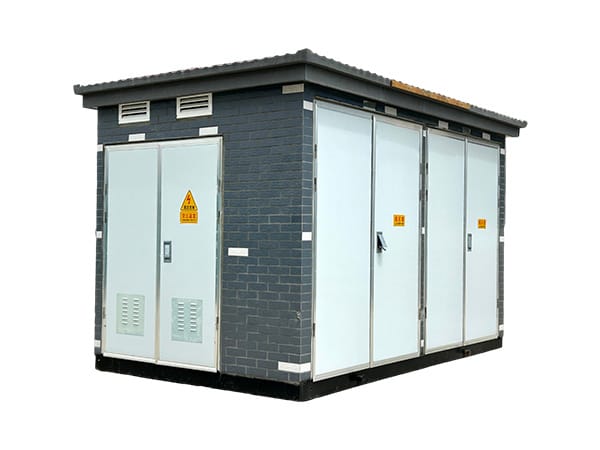
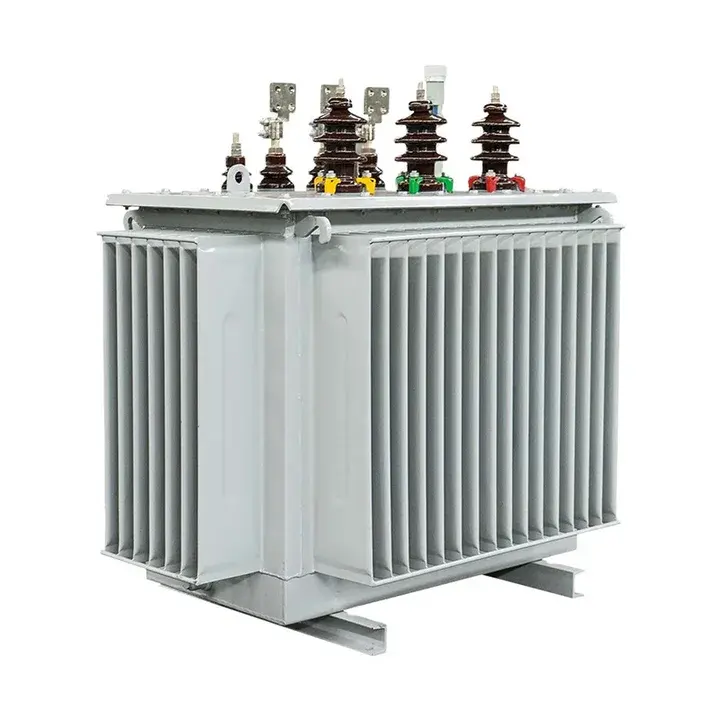
Ring Network Cabinet is a common electrical equipment used in daily life. Curious about their purpose? This article systematically introduces Ring Network Cabinet from multiple perspectives, including their purpose, structure, and installation methods. Check it out if you’re interested!
What is a Ring Network Cambient?
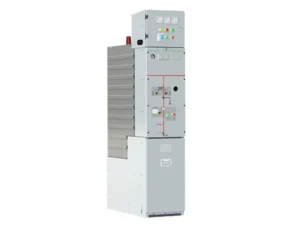
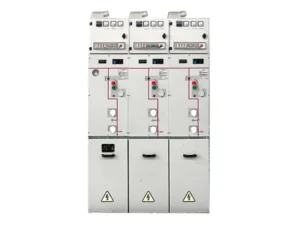
Ring Network Cambient is crucial high-voltage switchgear in modern power distribution systems. They offer stable performance and powerful functionality, and are widely used in urban distribution networks, industrial parks, commercial complexes, and other locations. Their primary components include load switches, circuit breakers, disconnectors, busbars, and protection and control units. Their primary function is to ensure stable power supply within each area and prevent widespread blackouts.
What is the purpose of a Ring Network Cambient?
The uses of a Ring Network Cambient can be categorized as follows:
Improving stable power supply
A typical Ring Network Cambient structure supports multi-directional power supply and prevents large-scale power outages on a single line or across multiple lines.
Protecting the power system
To protect the power system, its equipment safety systems, including circuit breakers and relays, can quickly disconnect circuits in times of crisis to prevent fires.
Managing loads
Load management is performed based on power consumption, and power can be flexibly cut off based on actual load conditions to ensure continuous and stable power supply.
Integrating renewable energy
It integrates with renewable energy sources such as photovoltaic and wind power, and provides power distribution and safety isolation.
Being more intelligent
Equipped with remote monitoring and communication modules, it is highly efficient, allowing for remote operation and real-time monitoring.
Ring Network Cambient Structure Introduction
The internal structures of Ring Network Cambients vary, but their core components are generally the same. The following are the main components of a standard Ring Network Cambient:
- Main Unit
Load Switch: Disconnects normal load current.
Circuit Breaker: Isolates short-circuit current and abnormal operating conditions, ensuring equipment and personnel safety.
Isolator: Provides a clearly visible disconnect point during maintenance.
Earthing Switch: Reliably grounds the line during maintenance, ensuring safe operation.
Busbar System: Connects the various switch units and transmits power.
- Auxiliary Unit
Current Transformer and Voltage Transformer: Provides measurement and protection.
Control and Protection Unit: Such as relays and smart terminals.
Remote Communication Module: Supports data exchange with the dispatch center.
- Enclosure and Insulation Method
RMUs are primarily classified based on insulation method:
Air Insulated RMU (AIS)
Gas Insulated RMU (GIS), typically using SF6 gas
Solid Insulated RMU (SIS), a new environmental trend
- Comparison of Common RMU Insulation Methods
| Type of Insulation | Features | Advantages | Challenges |
| AIS (Air Insulated Switchgear) | Uses air as insulation medium | Low cost, simple structure | Larger footprint, affected by environment |
| GIS (Gas Insulated Switchgear) | Uses SF6 gas | Compact size, high reliability | SF6 is greenhouse gas, requires monitoring |
| SIS (Solid Insulated Switchgear) | Uses solid materials | Eco-friendly, maintenance-free | Higher initial cost, technology evolving |
How does a Ring Network Cambient work?
The operating principle of a RMU is based on “ring power supply + rapid fault isolation.” Its core process is as follows:
- Normal Operation
Power enters the RMU from the main power source and is distributed to each branch circuit via the busbar.
All load switches and circuit breakers are closed, ensuring even power distribution.
- When a local fault occurs
The relay protection device detects abnormal current flow and automatically trips the circuit breaker.
The faulty section is isolated, while the remaining lines continue to operate, and power supply is unaffected.
- Backup Power Supply
Dispatchers can connect backup power to the ring network remotely or locally, further improving power supply continuity.
This principle enables the RMU to provide both rapid protection and redundant power supply within the power system.
What are the installation methods for Ring Network Cambients?
Ring Network Cambient installation methods vary, depending on the scenario and environment:
- Indoor Installation
Commonly used in distribution rooms, equipment rooms, and underground spaces.
Requires good ventilation and moisture and dust protection.
2. Outdoor Installation
Featuring a fully enclosed design, this unit is rainproof, dustproof, and corrosion-resistant.
Commonly found along roadsides, in residential areas, and in new energy power plants.
- Packaged Substation Integration
RMUs are integrated with transformers and low-voltage switchgear to create a “prefabricated substation,” suitable for rapid deployment.
- Underground Installation
In urban areas with dense cable density, RMUs can be installed in underground shafts, saving floor space.
Does it support intelligent remote control and carbon reduction?
With the advancement of smart grids and the “dual carbon” strategy, RMUs are increasingly adopting intelligent and green features:
- Intelligent Remote Control
Remote switching operations are enabled through SCADA systems or IoT platforms.
Supports real-time power monitoring, fault location, and load analysis.
Reduces manual inspections and improves efficiency.
- Carbon Reduction and Environmental Protection
New RMUs utilize solid or vacuum insulation, gradually replacing SF6 gas, which has a high greenhouse effect.
Precise load management reduces inefficient energy consumption.
Supports the integration of new energy sources and promotes green power transmission. Therefore, ring main units (RMUs) are not only power equipment but also a crucial support for smart cities and carbon neutrality goals.
Main Application Areas of Ring Network Cabinets
RMUs have a wide range of applications:
Urban power grids: distribution rooms, residential communities, and commercial complexes.
Industrial parks: factories, storage bases, and logistics parks.
Rail transit: subway, high-speed rail, and light rail power supply systems.
Energy projects: wind farms, photovoltaic power plants, and energy storage plants.
Infrastructure: hospitals, airports, ports, and data centers.
Main Functions of Ring Network Cabinets
Improve power supply reliability
Ensure safe power distribution
Relieve power distribution pressure
Support the development of smart grids and new energy sources
Reduced maintenance and operating costs
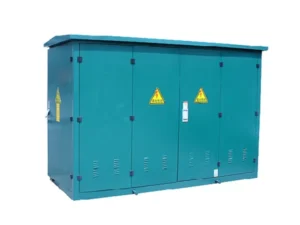
Ring Network Cabinet Usage and Maintenance Guide
To ensure the long-term stable operation of ring main units, the following maintenance principles must be followed:
- Regular Inspections
Check the smooth operation of switches
Check the insulation condition and grounding integrity
- Environmental Management
Maintain ventilation and cleanliness to avoid moisture and dust accumulation.
Perform regular anti-corrosion treatment on outdoor cabinets.
3. Intelligent Monitoring Applications
Use sensors and monitoring systems to monitor temperature, current, and voltage in real time.
Predict potential hazards through big data analysis.
- Operating Standards
Closing and opening operations must strictly adhere to electrical operating procedures.
Maintenance must follow the three-step process of “power outage – electrical testing – grounding.”
Conclusion
Ring Network Cabinets, as a crucial component of modern power systems, not only improve power supply reliability but also lay a solid foundation for the development of smart grids and green energy. In the future, with the widespread adoption of solid insulation technology, IoT applications, and intelligent remote control, ring main units will become even more environmentally friendly, intelligent, and efficient.

 English
  Russian
  French
  German
  Spanish
  Arabic