
Electricity is what powers modern life, but it gives back risks in the form of short circuits and overloads as well as risks associated with fire hazards. To ensure the safety of individuals, equipment, and property, circuit breakers and fuses are among the protective devices that could be used effectively. They may perform the same basic function of breaking the current under abnormal conditions but have differences in design, working principle, applications, and convenience.
This write-up discusses what a circuit breaker is, what a fuse is, the difference between the two, advantages, their use cases, and global market trends. At the end of this article, you will be able to make an informed decision on which of the two protective devices serves better in different environments.
What is a Circuit Breaker?
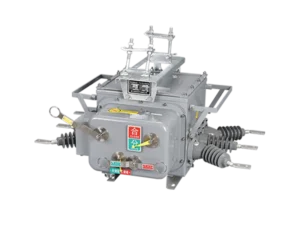
A circuit breaker refers to an automatically operated electrical switch that protects an electric circuit from the damages imposed by overcurrent or short circuits. It does not operate like a fuse, and once tripped, it can be reset either manually or automatically. A fuse melts only once and then has to be replaced.
Key Features of Circuit Breakers:
- Reusable after trip
- Provide adjustable protection in advanced types
- Can be disconnected manually for maintenance
- Available in many forms (miniature, molded case, air, vacuum, SF6, etc.)
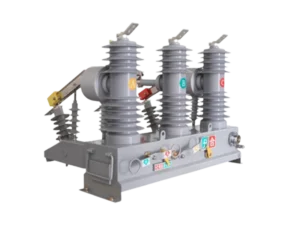
Commonly found within the home distribution board and industrial switchgear In a home setting, protection from route. and over line.(overload and short circuit) is usually by the Miniature Circuit Breaker (MCB). Bigger installations in premises most probably run on MCCB or ACB for even higher capacities.
What is a Fuse?
A fuse is a consumable device used as circuit protection wherein its element melts under high current conditions. It consists of a metal wire or strip housed inside a casing. Once this wire melts, the circuit breaks and no further damage can take place.
Fuses are very simple, Cheap and reliable device
They offer a very quick response time during any fault condition
Available in many ratings (from milliamps for electronics to hundreds of amps for industrial use)
Has to be changed after every fault Mostly seen in auto circuits, consumer gadgets and old electrical setups Since fuses are single use items they need spare replacements and may cause downtime when they blow.
What is the Difference Between a Circuit Breaker and a Fuse?
While both serve to protect circuits, their operation, reusability, and convenience are quite different. Below is a comparative table:
| Aspect | Circuit Breaker | Fuse |
| Working Principle | Mechanical switch with trip mechanism | Melting of metal conductor |
| Reusability | Resettable (no replacement needed) | One-time use, must be replaced |
| Speed of Operation | Slightly slower than fuses | Extremely fast response |
| Protection Types | Overload, short circuit, earth fault (advanced) | Mainly short circuit and overload |
| Cost | Higher initial cost | Low cost |
| Maintenance | Minimal (reset after trip) | Requires spare fuses and manual replacement |
| Applications | Homes, factories, heavy machinery, large systems | Cars, small appliances, electronics |
| Convenience | Easy to reset and restore power quickly | Replacement may cause downtime |
| Advanced Features | Smart monitoring, remote control | Not available |
Functions of Circuit Breakers and Fuses
Both devices share a core purpose: safety and protection. Specifically:
- Preventing fire hazards caused by overheated wires
- Protecting equipment from electrical damage
- Ensuring personal safety by cutting off live current during faults
- Maintaining power system stability by isolating faulted sections
Advantages of Circuit Breakers and Fuses
Circuit Breakers:
- Reusable over the long run hence cost effective.
- Easy to reset therefore low downtime.
- Able to carry high currents in industrial systems.
- Modern types go hand in hand with smart grid technology.
Fuses:
- Simple cheap and very reliable.
- Has no moving parts – less probability of mechanical failure.
- Better response time for sensitive electronic circuits.
- Readily available and standardized.
Applications of Circuit Breakers and Fuses
Circuit Breakers:
- Residential distribution boards
- Industrial plants and factories
- High-rise buildings, hospitals, data centers
- Renewable energy systems (solar, wind, etc.)
Fuses:
- Consumer electronics (TVs, chargers, laptops)
- Automobiles and motorcycles
- Small household appliances
- Backup protection in combination with breakers
Which is More Suitable for Homes and Factories?
Houses:Circuit breakers are better because of the simple fact that they can be reused, easy to operate and used for different electrical loads. That is the reason modern distribution boards have MCBs & RCCBs rather than fuses.
Factories: Both are used depending on configuration. In the case of heavy-duty equipment, circuit breakers take precedence because these can bear large currents and also due to advanced trip functions associated with them. However, fuses may still be utilized in motor protection or sensitive electronics because of a faster response time.
Why Do Modern Homes Use Circuit Breakers Instead of Fuses?
Modern households prefer circuit breakers because:
- No need to replace components after a fault
- More reliable for larger household loads (AC, heaters, induction cookers)
- Safer and easier for non-technical users to reset
- Compatible with RCDs/RCBOs for leakage protection
Frequently Asked Questions (FAQs)
- Can a fuse be reused?
No. Once it blows, it must be replaced.
- Can a circuit breaker be reset after tripping?
Yes, simply switch it back on after resolving the fault.
- Which protects faster, a fuse or a breaker?
Fuses typically respond faster, especially in small electronic circuits.
- Do cars use fuses or breakers?
Most vehicles use fuses for individual circuits because of their simplicity and low cost.
- Are breakers suitable for all fuse applications?
Not always. For very sensitive electronics, fuses remain better due to speed.
- Which is more economical in the long run?
Circuit breakers, despite higher upfront costs, save money by being reusable.
Market Insights: Global Demand for Circuit Breakers and Fuses
The global protective device market continues to grow due to urbanization, industrialization, and increasing demand for safe energy distribution.
Circuit Breakers Market: Expected CAGR of 6–7%, driven by smart grid adoption, renewable energy, and industrial expansion.
Fuse Market: Expected steady growth of 3–4%, particularly in the automotive and electronics industries.
Regional Demand:
High Demand Regions for Circuit Breakers: North America, Europe, China, India (due to industrial infrastructure).
High Demand Regions for Fuses: Japan, South Korea, Southeast Asia (electronics-heavy markets), plus global automotive hubs.
How to Choose Between a Circuit Breaker and a Fuse?
For residential and office buildings → Circuit breakers
For sensitive electronics → Fuses
For heavy industry → Combination of both (breaker + backup fuse)
For vehicles → Fuses remain the standard
Conclusion
The difference between a circuit breaker and a fuse is in much more than just their operation. It involves usability, application, and long-term cost efficiency. Fuses may win over circuit breakers when it comes to simplicity and speed of protection, but circuit breakers take the larger part of modern electrical infrastructure because they are resettable, durable, and versatile.
For homes and factories, circuit breakers are used while fuses still maintain great relevance in automobiles, electronics, and supplementary protection systems. They work hand in hand toward ensuring safer energy usage across the globe while making energy more reliable.

 English
  Russian
  French
  German
  Spanish
  Arabic